• New Kids on the World
    Current exhibition

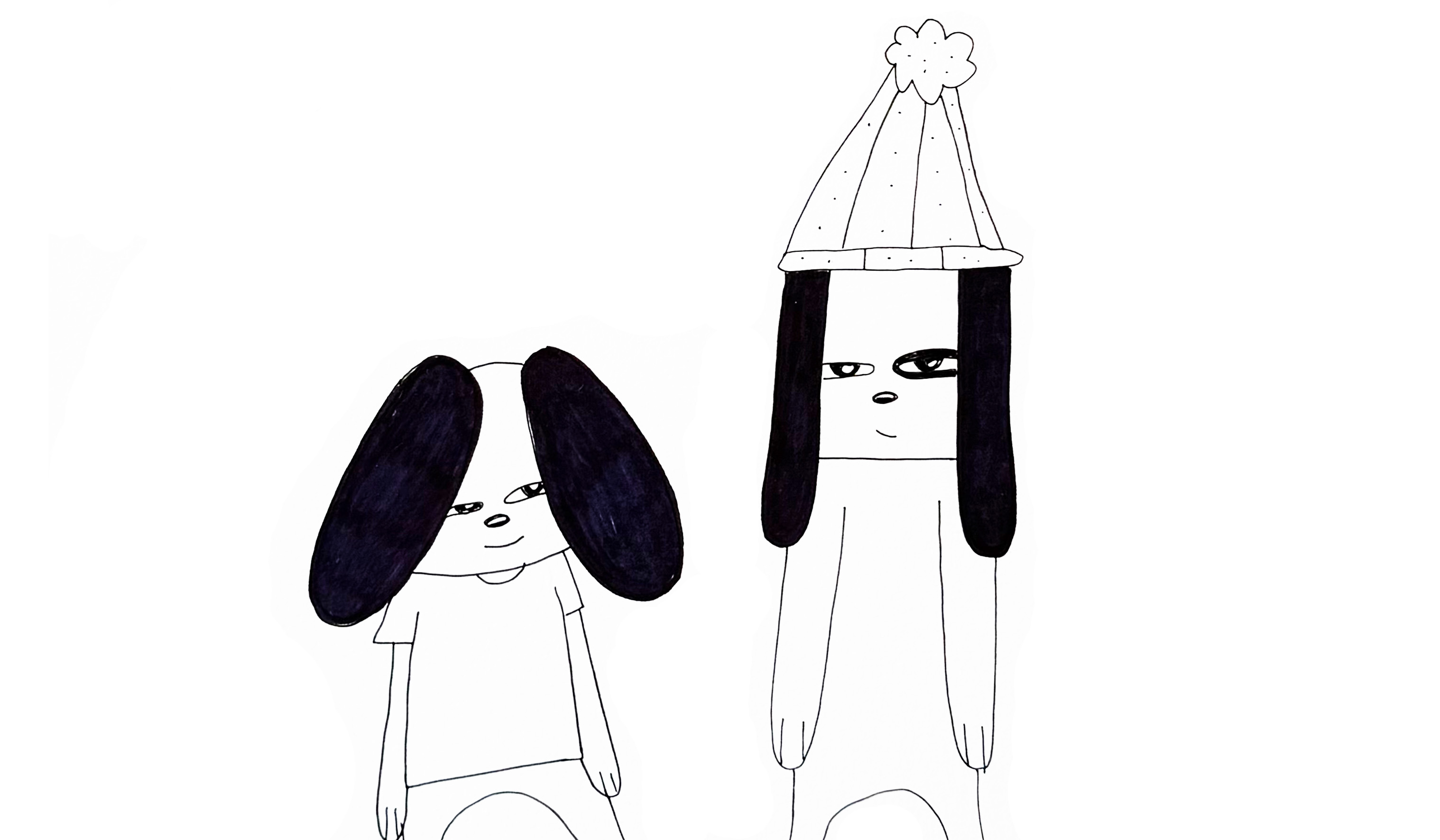
    AGGTELEK

    New Kids on the World

    22 Jan - 20 Mar 2026

    VIEW DETAILS VIEW DETAILS
  • ENTREVERSOS
    Current exhibition

    Yucef Merhi

    ENTREVERSOS

    22 Jan - 20 Mar 2026

    VIEW DETAILS VIEW DETAILS

Archive

Un pam de llum

Juan Olivares

Un pam de llum

20 Nov - 17 Jan 2026

The painting of Juan Olivares (Catarroja, 1973) unfolds in the territory of abstraction as an exercise in observation and resistance. Far from the languages of immediacy, his work defends the slow time of the pictorial process and the need to experiment through matter. In Un pam de llum this research is condensed around one axis: light as an agent of transformation, not as a simple visual effect, but as a symbol of inner clarity and the revelation of the invisible.

The artist approaches painting as a space where layers of color function as strata of experience. Each surface preserves the trace of its construction, the marks of a process that does not seek to hide, but to show itself as an essential part of the result. The manual gesture, the density of the oil, the transparency of the pigment, or the weight of color are elements that do not describe an image, but rather produce an atmosphere, a condition of the visible. In this sense, Olivares’s works do not represent but occur, because his painting refers to nothing other than its own existence.

There is in his work a constant tension between control and surrender. Each stroke seems to waver between the precision of one who knows what he is doing and the surrender of one who allows the matter to decide. This duality endows the pieces with a contained energy, a vibration that turns the static into a perceptive event. Light, in this context, is not a motif but a way of understanding the world, a way of seeing through clarity, even when that clarity sometimes blinds.

In the canvases and papers that make up Un pam de llum, painting manifests itself as a space of transition. Forms dissolve without disappearing entirely, as if color preserved the memory of the gesture that originated it. This intermediate condition, between presence and dissolution, is what gives the work its symbolic depth: painting understood as a territory where certainty fades and seeing becomes experience.

Faced with the noise and overexposure of the present, Olivares proposes a practice sustained in silence and observation. His work does not seek to represent light, but to let light happen. That is the true radicality of his proposal: to remember that even a minimal glow, a span of clarity, is enough for the essential to be revealed. Painting, then, does not question the world; it illuminates it.

José Luis Pérez Pont

El momento preciso

Carlos Tárdez

El momento preciso

20 Nov - 17 Jan 2026

The days still have twenty-four hours, but their measure no longer seems sufficient. In a time dominated by haste and superficiality, the painting of Carlos Tárdez (Madrid, 1976) asserts the value of slowness, contemplation, and pause as exercises of resistance. The precise moment refers not only to the depicted instant, but to the very act of looking—a conscious exercise that demands a kind of disobedience in the face of the continuous flow of stimuli.

Tárdez proposes a reeducation of time. His images, realistic in appearance, do not seek formal exactness but emotional resonance, the point at which observation becomes thought. His works are not closed narratives, but triggers of memory. They do not tell a story; they summon its possible versions.

Artistic practice, in this context, reveals itself as an act of lucid resistance, and at the same time an exercise that seems useless, yet is essential precisely for that reason. In times when usefulness is the measure of all things, art claims its uselessness as a refuge of the human.

His characters—adolescents caught in gestures that still belong to childhood—embody that transition between worlds, the moment when innocence gives way to awareness, when play begins to blend with responsibility, and the gaze becomes more reflective. In them persists the desire to hold on to what is lost, to keep alive a way of relating to the world based on curiosity and primary emotion. Without a doubt, growing up is nothing more than learning to look anew.

Each work by Carlos Tárdez measures time differently, not in minutes or days, but in intensity, in the mark left by experience when it is observed calmly. His painting reminds us that it is still possible to stop, to observe without guilt, to let thought rest upon the visible. And it may be that such a simple gesture is today the most radical form of freedom.

José Luis Pérez Pont

By Invitation: Mónica Jover Calvo e Ivan Forcadell

Mónica Jover Calvo, Ivan Forcadell

By Invitation: Mónica Jover Calvo e Ivan Forcadell

06 Nov - 09 Nov 2025

We look forward to seeing you at ‘By Invitation’ with Mónica Jover Calvo and Ivan Forcadell.

SELTZ by Ritter Ferrer will take part from November 6 to 9 in By Invitation, the modern and contemporary art fair held at the Círculo Ecuestre in Barcelona.

In the Palacete section, Mónica Jover Calvo presents a selection of works and a thread installation created specifically for the event, blending pictorial lyricism with technical experimentation. Her practice, focused on painting yet deeply influenced by the textile field and the use of thread as an essential element, is marked by an introspective sensitivity that explores the nature of being.

In addition, visitors can also enjoy a selection of works by Ivan Forcadell, whose vibrant and irreverent aesthetic—featuring bold colours and an open narrative—is always ready to engage playfully with the viewer.

The sixth edition of this fair revolves around the concept “Lines of Time”, a reflection on time as a fabric that connects generations, geographies, and imaginaries.

DATES AND OPENING HOURS
Thursday, November 6 · 5:00–8:00 p.m.
Friday, November 7 · 12:00–8:00 p.m.
Saturday, November 8 · 12:00–8:00 p.m.
Sunday, November 9 · 10:00–3:00 p.m.

If you wish to attend, send us an email at barcelona@seltz.art and we’ll send you your invitation.

Come and experience SELTZ at By Invitation.

Cataratas

Cataratas

18 Sep - 15 Nov 2025

In Cataratas, Cristina de Middel offers a critical reflection on the way we see—or believe we see—the world, particularly in relation to Africa. A waterfall clouds our vision, blurs the contours and turns looking into an uncertain act. In a present saturated with images, where photography has lost its aura of truth to navigate between overexposure and suspicion, de Middel chooses to embrace blurring as part of the creative process.

The exhibition is structured around a selection of works from several of the artist’s iconic series—The Afronauts, Midnight at the Crossroads, Funmilayo, Mirador, and This is What Hatred Did—which challenge colonial imaginaries, dominant media narratives, and the stereotypes that have historically constrained the representation of the African continent.

Far from offering definitive answers, these images act as fragmentary gestures, open visual questions that point to the limits of our perspective. The “cataract” in the title alludes both to cultural opacity and to the relentless torrent of images that shape our perception. In this context, accepting that limit becomes the first step toward seeing—and understanding—differently.

No título

Ivan Forcadell

No título

18 Sep - 15 Nov 2025

Iván Forcadell positions himself between the autobiographical, the rural, and the symbolically everyday in "No título".

Far from offering a closed thematic axis, the exhibition is constructed as an open invitation to the viewer. The artist himself defines it as a space without a fixed center, where tradition, the countryside, nature, folklore, community, life, and death coexist. These elements, more than intellectual concepts, are an essential part of his emotional biography and his aesthetic universe.

Forcadell proposes a perspective free of curatorial labels, opting for a direct and intuitive experience with the work. Rather than imposing a specific reading, No título suggests that each visitor complete the void of the title with their own associations, feelings, and memories. The exhibition thus becomes a fertile ground for interpretation, where the personal mixes with the collective, and the popular with the poetic.

Timeless Landscapes

Mateo Maté

Timeless Landscapes

26 Jun - 12 Sep 2025

Reality has progressively transformed into the wasteland of relativity; absolute certainties are increasingly scarce, and in this murky terrain, civil society has so far opted to take shelter while, in the background, the sound of dreaded war drums can be heard. In Timeless Landscapes, Mateo Maté proposes a line of work focused on exploring the terrain of deception, the duplicity staged in public life, and how its effects extend into private spheres. In recent years, the artist has developed an artistic practice grounded in a dual reinterpretation: on one hand, he reimagines 19th-century artworks; on the other, he appropriates military uniforms used in armed conflicts around the globe, using them as raw material to recreate those classical landscapes. The result is a solemn representation built from a rich variety of camouflage patterns, reminding us that in today’s world, almost nothing is what it seems.

While the masses continue their journey through the desert—exhausted by the struggle that survival has once again become, still addicted to obtaining the means to acquire as many consumer goods as possible, chasing a deceptive happiness that paradoxically recedes the harder one strives for it—Lipovetsky had already warned that our society runs on hyperconsumption, not on “de-consumption.” This is the outcome of the post-Fordist system, established through profound shifts in how demand is stimulated, how products are sold, and how consumer behavior and imagination are shaped. These transformations are part of an economic dynamic that began in the late 19th century, aligned with the broader current of the individualist civilization of happiness. Today, industries and services apply choice-based logics, personalize products and pricing strategies, and large-scale retailers adopt differentiation and segmentation policies—many of which mimic military strategy, now applied to economics. Yet all these changes serve only to further commercialize ways of life, feed the frenzy of needs, and tighten the logic of “always more, always new.”

War has historically been viewed as the ultimate stimulus for economic growth—a powerful machine that generates wealth through arms production while sowing destruction that later necessitates reconstruction. Global powers deliberately keep the flame of conflict alive, igniting timely disputes they seek to justify before the global public as reasons for military intervention. The manipulation of language—the altering of word meanings to tell stories aligned with specific interests—enables the capitalization of populist rhetoric. The events that shape international reality, as reported by mass media, are not random accumulations of objective facts; they are the result of narratives carefully constructed by communication experts from the world’s most powerful governments, often in partnership with major cinematic fiction factories.

It is wise, then, to remain skeptical—our senses often deceive us. A vast, powerful meaning-making machine works tirelessly to construct narratives in which millions of people invest their hopes, shaping discourses that magnetize our will. Mateo Maté constructs his own storytelling around us, conjuring a mirage that gently captures the gaze while inviting us not to settle for a first impression. He urges us to look again—to see exactly how the landscape of the real is constructed, as a symptom of the social and economic context of our time. The territory becomes the principal raw material for generating wealth, whether through direct exploitation of its resources or through appropriation of its symbolic values—offering promises of specific qualities that turn out to be trompe-l'œils. Timeless Landscapes presents idealized images of nature, landscapes that once adorned palaces and noble homes, evoking that permanent place of desire, like time capsules from the past. The artist engages with the power of images to suggest, and with the global manipulation that operates through visual storytelling. The abstract desire contained in the idea of nature and landscape is ultimately commodified, as the system endlessly colonizes and commercializes our desires.

It’s impossible not to consider how the implementation of industrial production processes and infrastructure is directly linked to environmental degradation and the reshaping of territory. Yet it seems the real danger lies not in their existence, but in how they are used. The production and consumption of goods and services exist in constant tension between improving business performance and ensuring market competitiveness. While we might believe that individuals have the power to choose and influence consumption trends, it’s clear that in our context, a lack of education in valuing and respecting the natural environment—fueled by decades of omission in the educational system—has shaped a collective consciousness driven by advertising stimuli aimed solely at consumption. The consequences of this transformation process impact both the environment and human life, directly and indirectly. In this spiral, it is crucial to highlight the superfluous nature of many needs generated by the post-industrial economy, whose primary goal is its own survival. Consumer culture has commodified everyday life to such a degree that it has emptied basic social habits of genuine meaning, privileging having and appearing over being—lives more performed than truly lived. In the face of these forces and interests, both personal and collective questioning becomes essential in developing critical capacities that might rescue us from decades of banality.

Art, of course, does not possess the instrumental power to reverse the situations described. Its role is not to resolve conflicts. Still, some artists take on the challenge of addressing them, helping define the role of certain creators as symbolic mediators within society. The great revolution now unfolding—or that is yet to come—will occur on emotional and personal levels of understanding. It is a person-to-person revolution, and thus, stimuli and narratives that activate these spheres of human reflection are more necessary than ever. Non-monolithic ideas and open-ended expressions of thought are like dew—absorbed gently by the natural species they touch. The unveiling performed by Mateo Maté cannot reverse the destructive flows that underpin the global war economy, nor can it take on the power centers where political strategies are crafted and legitimized—strategies that end up shaping the limits of many aspects of our lives. But pointing to the murky dynamics of exploitation—so normalized by their ubiquity—is a way to bring unregulated topics into public discourse. The construction of narrative itself has become the new-old battlefield where the struggle for social communication takes place, with all its potential rooted in civil and creative agency, aimed at planting the seeds of new ideas.

José Luis Pérez Pont